Single-crystal Ni-base superalloys are multi-element (> ~ 10 elements) alloys that are critical for the parts of high-temperature turbine engines. Over the years, multiple generations of superalloys were developed, where the latest compositions involve dense and Rare-Earth elements such as Re and Ru (up to 6 wt.%), making them heavier and costlier. Hence, it has a direct negative impact on engine efficiency and higher CO2 emissions.
Here, we use Atom Probe Tomography (APT) in correlation with electron microscopy to reveal the effect of solutes on the plastic deformation under stress at high temperatures. The results reveal the selective segregation of solutes at the atomic scale to the different types of defect structures produced in a 2nd generation CMSX-4 Ni-base single-crystal alloy. The results indicate compositional variation of solutes along the twin boundaries, and based on segregation behavior, we introduce the requirement of an additional reordering step in Kolbe’s mechanism of micro-twinning that can be one of the rate-limiting steps for the creep deformation.
Based on these observations, other than Re, the possible creep rate-limiting solutes were identified, and new compositions were designed with lower Re (by 1.5 wt.%) content. These show exceptional creep resistance compared to the base CMSX-4 composition in polycrystalline form. The study opens avenues for new superalloys for more energy-efficient and cost-effective turbine engines with lower CO2 emissions.
Viewable on demand by clicking here.
Presenter:
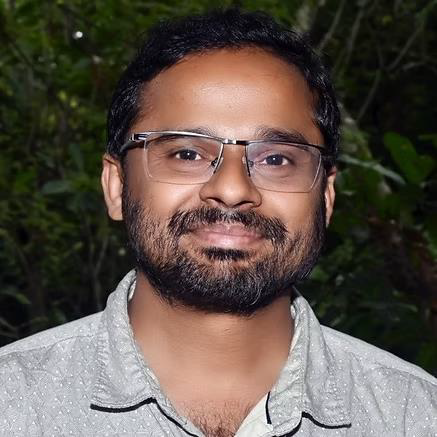
Dr. Surendra Kumar Makineni
Assistant Professor at the Department of Materials Engineering, Indian Institute of Science
Indian Institute of Science
Dr. Surendra Kumar Makineni is Assistant Professor at the Department of Materials Engineering Indian Institute of Science. He is an accomplished researcher with an industrial outlook with over 90 articles in peer-reviewed journals. He completed his Ph.D from IISc Bangalore. Before moving back to his alma matter as a professor he spent his time at Max-Planck-Institute for Iron Research Dusseldorf, Germany as a post-doctoral researcher where he was selected for the esteemed Alexander von Humboldt Fellowship. He got INSA medal for young scientist for the year 2024, NASI young scientist award for he year 2023 and young microscopist award from EMSI India for the year 2023. He is currently heading the Atomic-Scale Engineering for Sustainable Materials (ASESM Group) at IISc and also as a group head for the MPG-IISc Partner group (2021-2026). The group work on a range of materials for engineering applications such as aerospace, automobiles, etc. They manipulate structures at the atomic-scale by elemental additions to design new materials with improved properties. The main areas are Superalloys (Co- and Ni-based), Light Metal Alloys (Al- and Mg-based), and other engineering alloys such as Cu-based, High entropy alloys, etc. Additionally, with advanced microscopy characterization methods, they correlate the effect of local structure and compositional changes directly to the material strength and creep properties.