Rapid Room Temperature Desensitization of Stainless Steels – Atomic Scale Insights by Correlative Atom Probe Tomography and Electron Microscopy
Sensitization of stainless steels has long been known to substantially degrade the corrosion resistance of stainless steels by making them susceptible to localized intergranular corrosion. This phenomenon has a substantial impact across a wide range of applications in the nuclear, oil and gas, transportation and chemical processing industries. Conventional remediation treatments involve time-consuming, energy-intensive heat treatments. Here we present the use of ultrasonic nanocrystalline surface modification (UNSM), a high strain-rate surface peening technology to rapidly desensitize a sensitized austenitic stainless steel microstructure. The combined use of atom probe tomography (APT) and high-resolution transmission electron microscopy measurements provided crucial insights, at the atomic-scale, into the high strain-rate induced deformation mechanisms responsible for reviving the corrosion resistance of the sensitized austenitic stainless steel.
You will learn:
- About a technology involving near-surface severe plastic deformation, to rapidly ‘de-sensitize’ stainless steels at room temperature, to reinstate their corrosion resistance
- Atomic scale mechanisms responsible for achieving this in sensitized stainless steels
- Unique role of correlative atom probe tomography and transmission electron microscopy in developing this understanding
Available on-demand at our Thinkific website by clicking here.
Click here to download a one-page summary of the research findings.
Presenters:

Sasidhar Kasturi, PhD
Senior Applications Scientist
CAMECA
Sasidhar Kasturi is currently Senior Applications Scientist at CAMECA Instruments Inc. Madison, WI. Prior to this, he worked as a staff scientist at the University of Wisconsin-Madison. He obtained his Bachelors and PhD degrees in Metallurgical and Materials Engineering from the Indian Institute of Technology Roorkee, and carried out post-doctoral research at the Max-Planck Institute for Iron Research (now Max-Planck Institute for Sustainable Materials). He has performed significant research on the development of alloys and surface engineering processes for high performance in harsh environments, making use of near atomic scale characterization techniques, thermodynamic modeling and machine learning approaches.
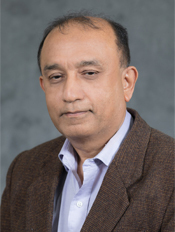
Kumar Sridharan, PhD
Grainger Professor
University of Wisconsin
Prof. Kumar Sridharan is Grainger Professor in the Departments of Nuclear Engineering & Engineering Physics and Materials Science & Engineering and Vilas Distinguished Achievement Professor at the University of Wisconsin, Madison. His expertise spans a broad spectrum of areas in the field of materials science and metallurgy, including nuclear reactor materials, corrosion, surface modification and coatings processes, plasma-based synthesis and deposition of materials, characterization and testing of materials, and intersections of materials and manufacturing. He has over 350 publications in these areas including five patents, seven invited book chapters, journal articles, reviewed conference proceedings, and industry/national laboratory reports. Prof. Sridharan has provided research mentorship to over 150 graduate and undergraduate students, post-doctoral research associates, staff scientists, and incoming faculty. His research has involved the use of APT for spatial distribution of oxide nanoclusters in oxide dispersion strengthened (ODS) steels, effects of nanoscale compositional homogenization in sensitized stainless steels by severe plastic deformation, and for understanding the mechanisms of corrosion of alloys in molten salt environment. He is an elected Fellow of American Society for Materials, Fellow of Institute of Materials, Minerals, and Mining, United Kingdom, and Fellow of American Nuclear Society in recognition for his contributions to the fields of materials for nuclear energy systems. surface modification and coatings technologies, and education.